
Pests, Disease & Farm Biosecurity — What Every Coffee Farmer Should Know
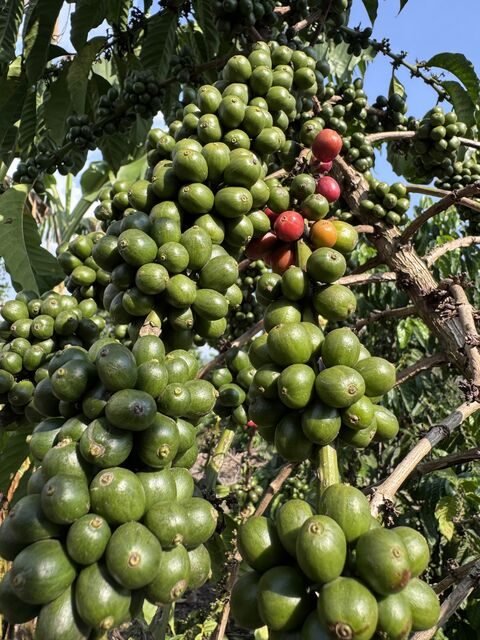
Most serious coffee farm losses trace back to something small that was caught too late. Walking the farm regularly, knowing what you're looking at, and reacting quickly is worth more than any single spray or treatment.
Coffee Wilt Disease (CWD)
Coffee Wilt Disease is a fungal disease that can kill a mature tree outright, and it's progressive — it doesn't stay put. Watch for:
- Wilting that starts at the top of the tree and works its way down.
- Bark that peels off, revealing black discoloration inside the stem — a sign the disease has eaten into the wood itself.
- Leaves progressively dropping as the disease advances.
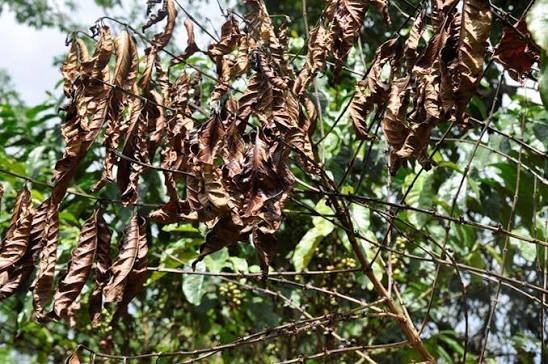
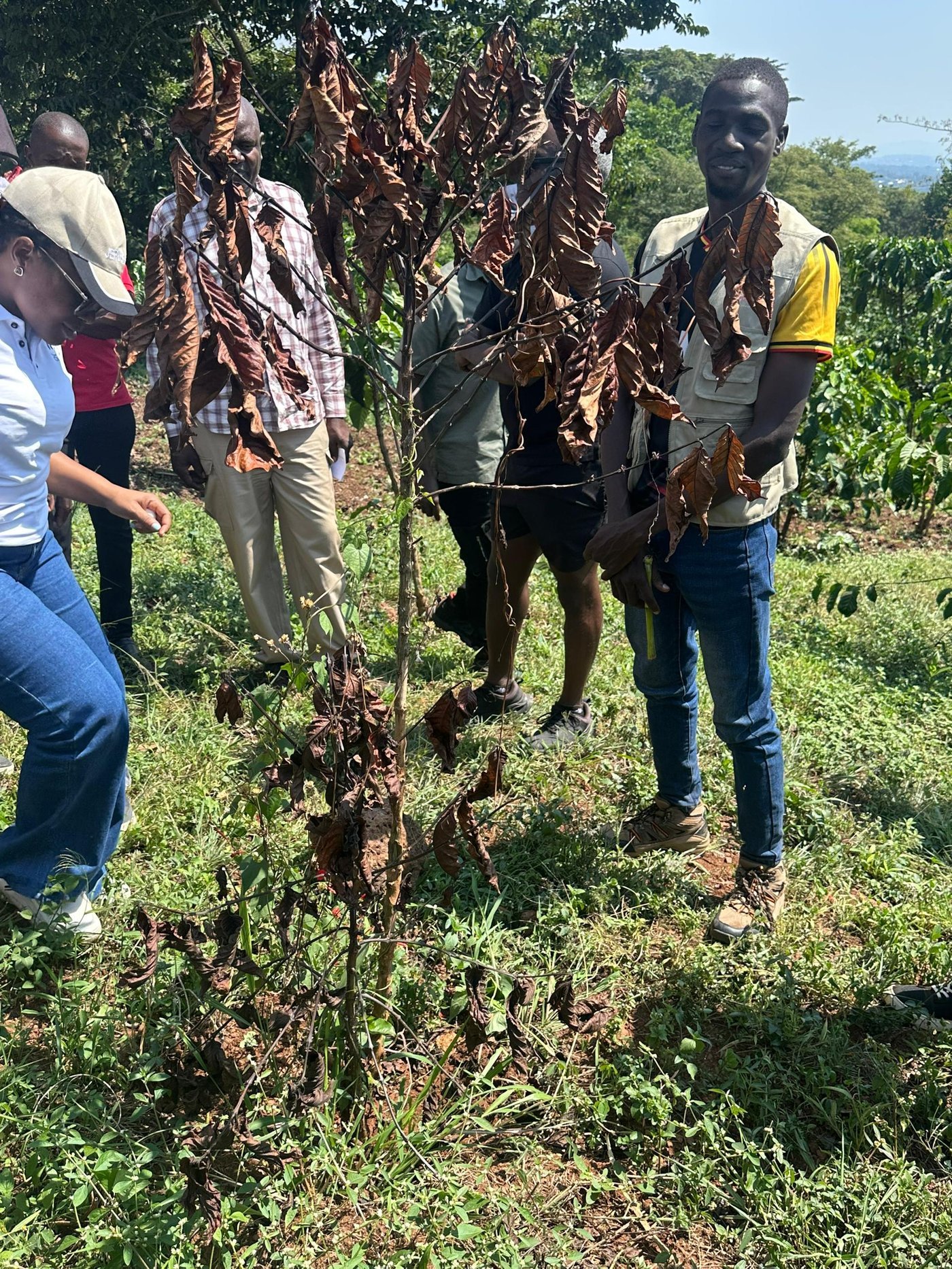
CWD spreads through tools and through coffee husks — clean pruning tools between trees, and never move husks from an infected block onto healthy ground. Every time you fill a gap left by a dead tree, replant with a CWD-resistant KR clone (see our KR varieties guide) — it's the closest thing to planting an immunised tree.
Root rot (sometimes locally called Ameleria) shows differently — shake the branches and cherries fall off easily, a sign the roots themselves have failed.
Coffee Twig Borer (CTB)
CTB hides in shaded conditions, which is one more reason not to over-shade a coffee block. It's also highly mobile — able to fly roughly the distance of two football fields before landing — which is exactly why community-wide surveillance and mobilisation matters: one untreated neighbouring farm can reinfest a well-managed one.
- Reduce shade and open the canopy — prune back branches so light reaches further into the tree.
- Remove and burn infested branches — don't leave cut material lying in the field.
- Use alcohol traps to monitor and trap CTB. Pheromone traps are for fruit flies, not CTB — using the wrong trap gives a false sense of control.
- Report outbreaks to local agricultural authorities — CTB's mobility means early community notification helps contain it before it spreads farm to farm.
Sooty Mould, Aphids, Scales & Ants
Ants, black sooty mould and a white powdery residue on stems usually occur together — this is a classic sucking-pest association. Aphids and scale insects feed on the tree and excrete "honeydew"; ants are drawn to that honeydew and, in turn, protect the aphids and scales from natural predators, while sooty mould grows on the honeydew residue itself. Because they occur together, treating just one part of the chain rarely works on its own. Manage this combination by:
- Painting affected stems with black (agricultural) oil.
- Opening up the canopy so more light penetrates and disrupts the humid, shaded conditions these pests prefer.
- Using a soapy-water spray, which creates a sticky layer on the stem that disrupts the ants' access.
As a general principle on our farm: the greatest disinfectant is sunlight and air. Most pest and disease pressure builds fastest in shaded, still, humid conditions — and eases wherever light and airflow are restored.
Good Farm Biosecurity Habits
- Walk the whole farm at least once a month — most problems are far cheaper to fix when caught early.
- Every farm should have a written biosecurity policy, and every worker should be oriented on it — tool cleaning between blocks, not moving plant material between farms, and reporting anything unusual immediately.
- Use more than one pest/disease control method together rather than relying on a single approach — we favour traditional, low-input methods as the mainstay, backed up by targeted treatment when needed.
- Mulch away from the trunk, not right up against it. Mulch piled against the stem encourages roots to grow upward toward the moisture and nutrients in the mulch (hydrotropism) instead of growing down — which weakens the tree's root structure over time.
- Prune between harvest periods. Use the gap between harvesting cycles to clean up the tree — removing dead, diseased and unproductive wood.
- Know your source. Only plant certified, disease-resistant seedlings from a known nursery. Sourcing seedlings of uncertain origin risks introducing the wrong variety, or disease, onto an otherwise healthy farm.
Termites — Not Always the Enemy
It's tempting to spray every termite mound on sight, but termites are part of a healthy farm ecosystem — they break down old wood, leaves and mulch, and help recycle those nutrients back into the soil. Reserve treatment for termites actively attacking living coffee trees, rather than treating every termite on the farm as a threat.
Give Every Tree Real Attention
A coffee tree typically carries 16 to 24 fruiting joints per productive branch. Part of routine management is removing non-yielding clusters so the tree's energy goes into the joints that will actually produce. The underlying principle applies to the whole farm: it's better to plant only as many trees as you can properly attend to than to plant more than you can manage — every tree deserves full attention, not partial attention spread across too many.
Suspect Coffee Wilt Disease or twig borer on your farm? Contact our farm team — early diagnosis is the single biggest factor in saving a block.