
Use of Bee Keeping on a Coffee Farm
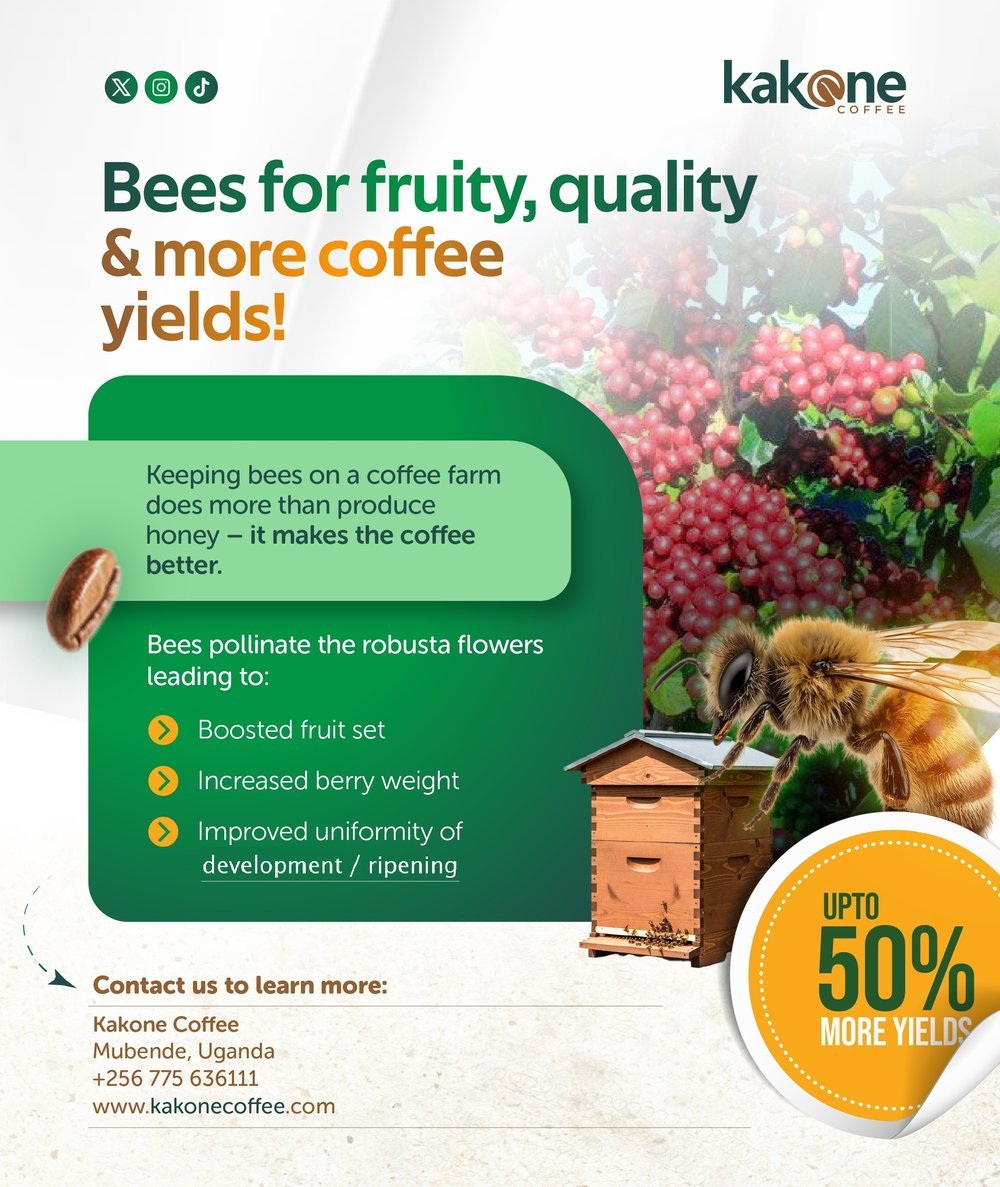
Robusta coffee is self-sterile — a flower can't fertilise itself. It depends on insect cross-pollination between different clones to set fruit well, which is exactly where bees earn their place on a coffee farm.
What Bees Actually Do For Your Coffee
Bees pollinate the Robusta flowers as they move from tree to tree collecting nectar, and that pollination leads directly to:
- Boosted fruit set — more flowers successfully turn into cherries.
- Increased berry weight — better-pollinated cherries fill out more fully.
- More uniform development and ripening — cherries on a well-pollinated tree ripen together, which makes harvesting easier to plan.
Keeping bees on a coffee farm does more than produce honey — it makes the coffee better, with hives on a well-managed farm associated with up to 50% more yield. More bees on the farm means better pollination, better fruit set, and stronger yields across the whole block.
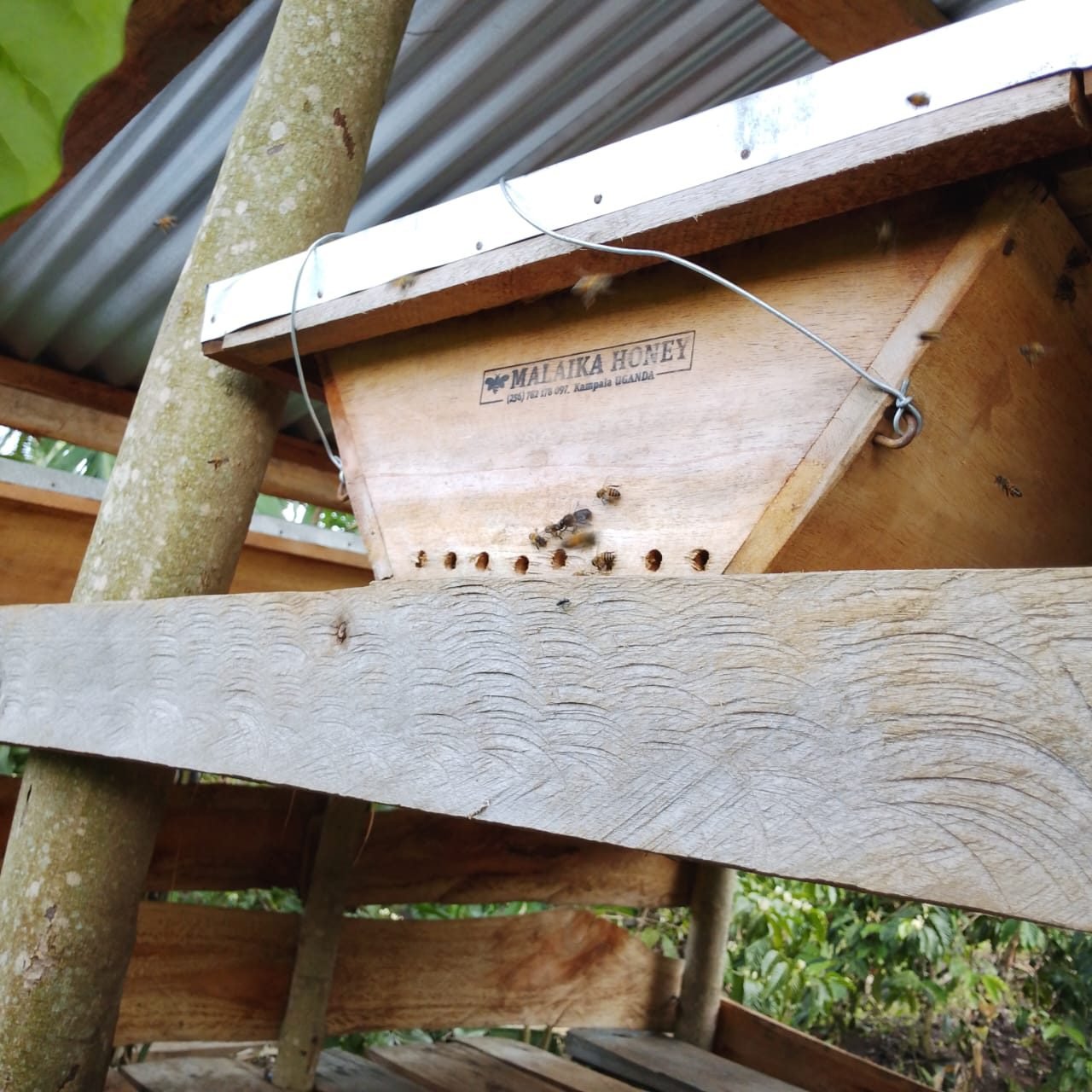
And beekeeping pays for itself twice over: alongside the pollination benefit, honey is a genuine secondary income stream in its own right — sold directly from the farm, on top of whatever it adds to the coffee harvest.
Who Manages the Hives
On our own farm setup packages, an Apiary Specialist sets up and manages hives on farms over 10 acres, timed around the coffee flowering calendar — this is a role we bring in per project rather than a full-time hire, scaled to the size of the farm.
Keeping Bees Healthy and Productive
- Water is essential. Bees will fly several kilometres to reach water, but a farm with its own accessible water source keeps hives healthier and closer to the coffee they need to pollinate — the same on-farm water systems that support irrigation double up here.
- Feed them when nectar is scarce. Maize flour (mixed as a pollen substitute) helps sustain hives between flowering seasons.
- Plant what bees love. Calliandra is a bee favourite, and doubles as a useful shade and mulch species on the farm (see our shade tree & agroforestry guide). Planting other flowering plants around the farm gives bees more forage and keeps them active across more of the season.
- Keep hives away from livestock. Bees and grazing animals don't mix well — site apiaries away from cattle paths and animal housing.
Have a farm over 10 acres and want to add beekeeping? See our Farm Setup & Management services or get in touch to discuss an apiary setup.